
What Is Normal Vaginal pH, and Why Does It Matter?
Every intimate wash on the market says “pH balanced.” Almost none of them explain what that means or why you should care.
Here’s the short version, and what it tells you about choosing a product.
What pH actually measures
pH measures how acidic or alkaline something is, on a scale from 0 to 14. Below 7 is acidic, 7 is neutral, above 7 is alkaline.
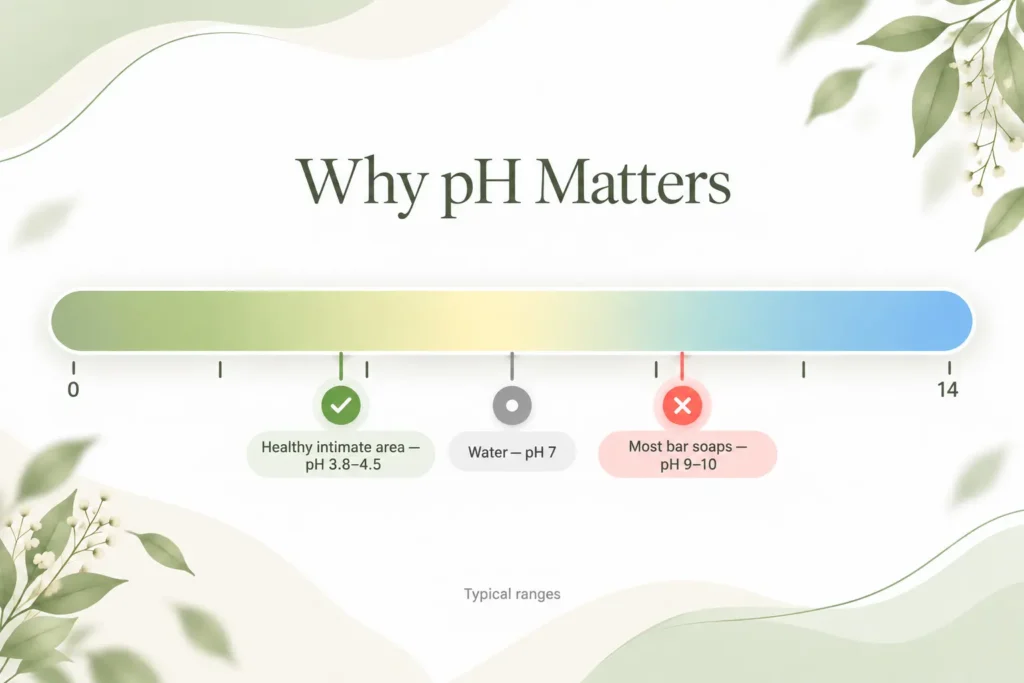
A healthy vagina is acidic — usually between pH 3.8 and 4.5.
For comparison, lemon juice is around 2, plain water is 7, and most bar soaps are 9 to 10.
Why your body keeps it acidic
The vagina maintains its own acidity using helpful bacteria called lactobacilli. These bacteria produce lactic acid, which keeps the environment acidic.
That acidity isn’t an accident. It makes the environment difficult for less helpful bacteria to multiply in. In other words, your natural pH is part of how your body protects itself, and that’s why disturbing it matters.
This is also why the vagina needs no internal cleaning. It manages itself, and washing inside works against the system rather than helping it.
What can raise your pH
pH naturally shifts, and a temporary change isn’t a problem. Common causes:
- Your period. Menstrual blood is close to neutral, so pH rises for a few days each month.
- Semen, which is alkaline.
- Antibiotics, which reduce helpful bacteria along with the ones being treated.
- Douching or washing inside, which strips out the lactobacilli doing the work.
- Alkaline soap used on the external area.
- Hormonal changes, including pregnancy, breastfeeding and menopause.
pH is also naturally higher before puberty and after menopause, when oestrogen levels are lower. Both are normal.
Should you test your pH at home?
Test strips are sold for this, but they’re of limited use on their own. A reading above the normal range tells you something has shifted, not what caused it, and the causes range from your period to an infection that needs treatment.
If you have symptoms, see a doctor rather than a test strip. A proper examination gives you an answer; a number doesn’t.
What this means for choosing an intimate wash
his is the practical takeaway. Since the external intimate area sits in a mildly acidic environment, a cleanser matched to that range is gentler on it than an alkaline soap.
That’s the entire reason intimate washes exist, and why pH is the first thing to check on a label. If a brand doesn’t state its pH, it hasn’t told you the one thing that matters most.
Our guide on how to choose an intimate wash in Pakistan covers what else to look for, and intimate wash vs regular soap explains the difference in more detail.
When a pH change needs a doctor
See a doctor if you notice:
- A strong or fishy odour that doesn’t go away
- A change in the colour or texture of discharge
- Itching, burning or pain
- Discomfort when urinating
- Symptoms that keep returning
These are common and treatable. No wash, whatever its pH, can treat an infection, and using one to cover symptoms only delays getting the right care.
Where Myji fits
Myji Daily Bloom Intimate Wash is formulated at pH 3.5–4.5 with lactic acid, aloe vera, chamomile and Korean botanicals. It’s soap-free, free from parabens, SLS and artificial dyes, and dermatologist tested for gentle daily use. Order online with free delivery across Pakistan in plain, discreet packaging.
Frequently asked questions
What is a normal vaginal pH?
Usually between 3.8 and 4.5 for women of reproductive age, which is mildly acidic.
Does pH change during my period?
Yes. Menstrual blood is close to neutral, so pH rises temporarily. This is normal.
Can an intimate wash fix my pH?
No. A pH-balanced wash is designed not to disturb your natural balance. It doesn’t correct a problem, and persistent symptoms need a doctor.
Is a higher pH always an infection?
No. Your period, recent sex and hormonal changes all raise it temporarily. A sustained change with symptoms is what needs checking.
This article is for general information and is not medical advice. Consult a qualified healthcare professional about any symptoms or concerns.